image002-1

A closed account could open better doors

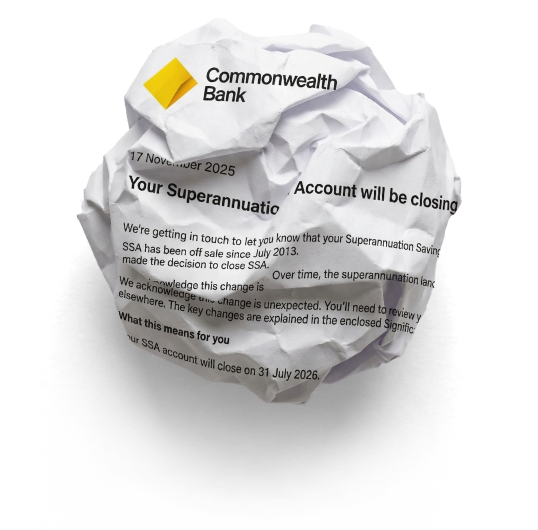
CBA's superannuation savings accounts have been off sale since 2013, but many customers have held onto them for years. Now CBA has confirmed they're closing for good, with balances to be transferred by 30 June 2026.

If no action is taken, your balance will be transferred to the ATO as unclaimed super. It won't be lost, but it won't be working for you either – no contributions, no insurance cover and returns that only keep pace with inflation.

CBA can't tell you what to do next. That's where we come in.
The right people in your corner

The Incra team brings nearly 20 years of experience helping Australian families and businesses make smart financial decisions. We bring tax and investment expertise together under one roof.

With over 1,500 clients and a 95% year-on-year retention rate, we've built our reputation on giving people clear, honest advice – and being there for the long ter

Lindqvist_Clintont

Clinton Lindqvist  

Tax and Accounting Director

Clinton leads superannuation advice at Incra. As a CFA graduate, registered tax agent and authorised representative of GPS Wealth, he holds the right combination of qualifications to advise on both the tax implications and the investment strategy of your super.

We'll guide you through every step

1. Understand

We start with a discovery call to understand your situation, goals and who's involved, with straightforward advice on whether an SMSF is right for you.



2. Execute

 If you choose to go ahead, we take care of the paperwork, legal structure and compliance from start to finish – so you don't have to become an expert. 

3. Grow

Once your fund is running, we become your trusted advisers, handling annual accounts, tax returns and audits, and helping you make smart investment decisions.

Take control of your super

A self-managed super fund is a super fund you control, set up specifically for you and your family. Your money is held in a structure you direct, with a much wider range of investment options – including shares, cash, managed funds and direct property.

Up to six people can be members of the same fund. That means a couple, siblings or a small family group can pool their super balances together – combining what might be modest individual amounts into something that opens up real investment opportunities. Each member's balance is tracked separately, so you always know exactly what's yours.

Book a complimentary discovery call with the Incra team

The deadline to transfer your CBA balance is 30 June 2026. The sooner we talk, the more time we have to get everything in place. With the right advice, this could be the best financial decision you make for your family

To learn more, call us on 1300 040 808, email hello@incragroup.com.au or submit the form and we'll be in touch. 

Frequently Asked Questions

What's happening with my CBA superannuation savings account?

CBA requires all superannuation savings account balances to be transferred by 30 June 2026. The accounts have been off sale since 2013, but existing customers have been able to keep them open until now. CBA has written to all affected customers with details of the closure and their options.


What happens if I do nothing?

If you don't transfer your balance before the deadline, CBA will send it to the ATO as unclaimed super. It won't be lost – you can retrieve it at any time – but while it sits there, contributions stop, insurance cover is gone and your balance only keeps pace with inflation. It's worth acting before that happens.


What happens if I miss the 30 June deadline?

Your super isn't lost. The ATO will hold it as unclaimed super, which can be retrieved and rolled into a new fund at any time. It's a little more work to recover it, but it's doable. Get in touch and we'll walk you through it.


What are my options?

The right choice depends on your situation – your balance, your goals and who's involved. We'll help you work through what makes sense for you.


What is a self-managed super fund (SMSF)?

An SMSF is a superannuation fund you control directly, rather than having your money managed by a bank or institution. You decide where it's invested, who's in the fund and how it's structured. It comes with more flexibility and more responsibility – which is why having the right adviser matters.


How much do I need to make an SMSF worthwhile?

It depends on your situation. As a general guide, a combined balance of $300,000 or more across all members tends to make an SMSF viable – though the right answer depends on your specific goals and circumstances. Around 41% of all SMSFs in Australia hold between $200,000 and $1 million, so it's more common than most people assume. We'll give you an honest assessment in your discovery call.


Can I include family members in my SMSF?

Yes. An SMSF can have up to six members – typically a couple, siblings or a small family group. Pooling balances together increases your combined investment options significantly. Members under 18 can also be included, with a parent acting as trustee on their behalf until they turn 18.


Do members keep their own separate balances?

Yes. A common misconception is that everyone's super gets pooled into one pot – but individual member balances are tracked separately and clearly reported in the fund's financial statements. Your contributions, rollovers and share of investment returns are all attributed to you individually.


Is running an SMSF a lot of work?

It’s less work than most people expect. As trustees, you're responsible for making investment decisions and ensuring the fund operates within ATO rules – but we handle the compliance, annual accounts, tax returns and audit for you.


What can an SMSF invest in?

SMSFs can invest in a wide range of assets, including Australian and international shares, cash and term deposits, managed funds, exchange-traded funds and direct property, including commercial real estate. Your fund needs a documented investment strategy, and there are rules around what's permitted, but the flexibility is significantly greater than a standard retail fund. One thing to note: super funds cannot be used to buy a property you live in or to pay down your home loan – those arrangements are specifically prohibited.


Can an SMSF borrow to buy property?

Yes, through a structure called a limited recourse borrowing arrangement. It's more complex than a standard property purchase and the interest rates are typically higher, but it's a legitimate and popular strategy for SMSFs looking to invest in real estate. We can walk you through how it works and whether it suits your situation.


Is there a minimum investment return I need to hit?

No. There's no minimum return required. There is, however, a general obligation on trustees to invest prudently and act in the best interests of all members, which is part of what we help you navigate.


What does it cost to set up and run an SMSF?

The costs vary depending on the number of members and the complexity of your fund. We'll be transparent about all costs upfront and assess whether an SMSF makes financial sense for your specific situation before you make any decisions. If it doesn't stack up, we'll tell you.


How long does it take to set everything up?

From the initial conversation to having your fund established and your super rolled in, the process typically takes a couple of months. That's why we recommend getting the conversation started sooner rather than later – particularly with the 30 June deadline approaching. And if the deadline passes before you're ready, we can help you recover your balance from the ATO and find it a better home.